Genetic Molecular Laboratory, Forest Restoration and Green Finance: State Forest Agency Submitted Proposals to the GEF-8 Project
During the inception workshop of the GEF-8 forest landscape restoration project, all stakeholders expressed their vision of specific steps and the geographic scope for implementing this project.
The implementing agency is the Food and Agriculture Organization of the United Nations (FAO). The executing agencies will be the State Forest Agency and the Ukrainian Research Institute of Forestry and Forest Melioration (URIFFM). Currently, the phase of preparing full project documentation funded by a GEF-8 grant has begun.
The seminar was attended by government officials, forestry experts, members of the State Forest Agency, scientists, as well as representatives of the private sector and the environmental community.
The State Forest Agency insists on including the creation of a genetic molecular laboratory in the project as a key element to ensure biological resilience and biodiversity of forest reproductive material for adaptation to climate change. In fact, the laboratory should become the core of the project, as forest restoration must be based on scientifically grounded laboratory research results.
«The seminar provided an opportunity to discuss the most important directions for implementing this project, define the final outcomes we aim to achieve, and on this basis develop specific project documentation. Three directions are important for us: creation of a molecular genetic laboratory, restoration of forests damaged by hostilities, and attracting ‘green finance’ to preserve naturally regenerated forests», - emphasized First Deputy Head of the State Forest Agency, Volodymyr Buchko.
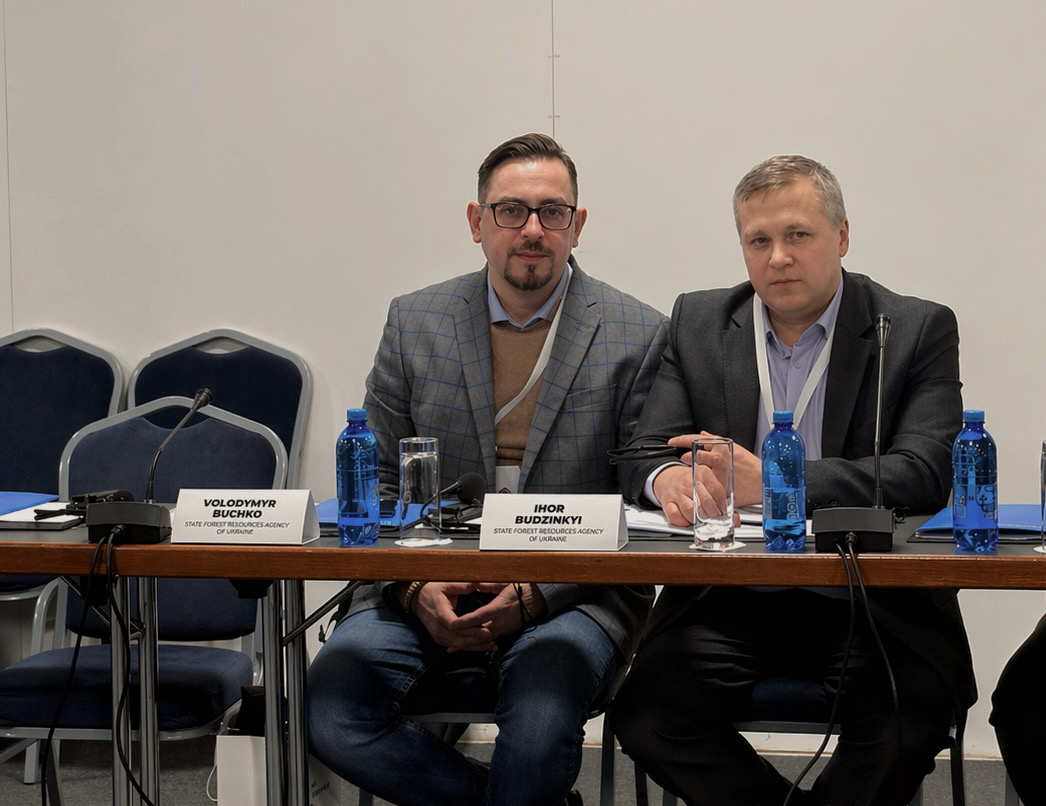
According to Ihor Budzinskyi, Head of the Department of Forestry and Forest Regeneration, the restoration of forests damaged by war and their demining is one of the agency’s priorities.
«That is why we want to see this direction included in the project implementation. In particular, to involve experts, modern demining technologies, as well as scientific support in researching demining methods», - he noted.
Ihor Budzinskyi added that within the project it is possible to consider designating territories contaminated with explosive hazards as protected areas and to study the experience of international partners in this field.
He also emphasized that an important direction is attracting ‘green finance’ to preserve naturally regenerated forests. Such funding can incentivize communities to conserve self-forested areas. However, it is also necessary to study international experience in verifying carbon sequestration by forests.
«Work in these areas within the GEF-8 project will help increase the area of restored forests and protected natural areas, adapt forests to climate change, attract international funding, and strengthen the economic condition of communities. This will be an interesting and useful experience for our country», - Ihor Budzinskyi concluded.
.png)